DevOps8 min read

Modernizing Stale Code Intelligence: Turn Outdated Ownership, Dependencies, and Runtime Signals into Living Maintenance Maps

Modernization programs stall when your “system of record” for ownership, dependencies, and operational hotspots drifts from reality. Drawing on Jeff Smith’s QCon London 2026 session summary on refreshing stale code intelligence (InfoQ), this post outlines how to rebuild continuously updated signals—and convert them into living maintenance maps that drive refactors, deprecation plans, and safer migrations.

Modernization doesn’t usually fail because teams can’t refactor code. It fails because teams can’t trust what they think they know about the codebase.

The longer a system lives, the more your “inventory” diverges from reality: who owns what, which services actually depend on a library, where runtime hotspots really are, and whether a component is safe to deprecate. That mismatch is the heart of what InfoQ described in its summary of Jeff Smith’s QCon London 2026 talk, “Refreshing Stale Code Intelligence”—a session centered on the growing gap between organizational belief and operational truth as code evolves over time. (Source: InfoQ coverage of QCon London 2026: https://www.infoq.com/news/2026/03/stale-code-intelligence/)

Below is a practical framework for turning stale code intelligence into living maintenance maps—continuously refreshed views of ownership, dependencies, and runtime signals you can use to prioritize refactors, execute deprecations, and keep upgrades on track.

Context: why “stale code intelligence” is the silent modernization killer
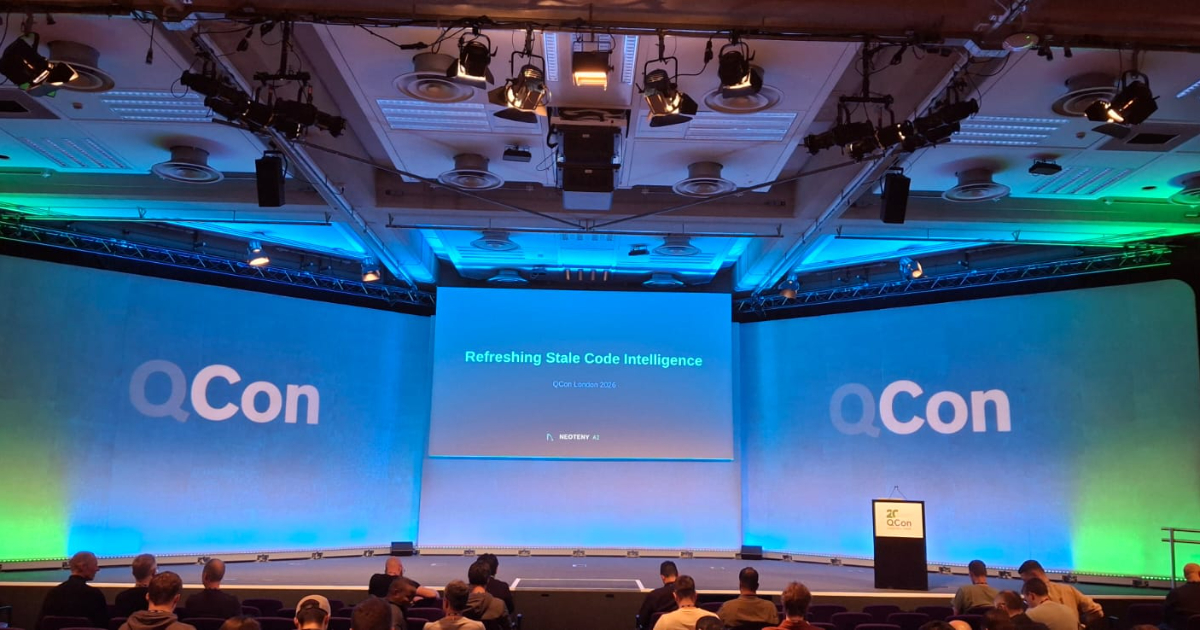
Modernizing Stale Code Intelligence: Turn Outdated Ownership, Dependencies, and Runtime Signals into Living Maintenance Maps

Most engineering orgs have multiple “truth systems” for code intelligence:

  • A wiki page listing service owners n- A dependency diagram that was accurate… two quarters ago
  • Terraform and Kubernetes manifests that imply runtime relationships
  • APM dashboards showing what’s hot (but not why)
  • CI/CD metadata that tells you what changed (but not what’s impacted)

Over time, these signals drift. Teams reorganize, services split, libraries get copied, and runtime behavior changes. Meanwhile, governance artifacts—ownership docs, dependency spreadsheets, architecture diagrams—get updated only when there’s time (which is never).

In the InfoQ session summary, this is framed as a growing mismatch between what engineering organizations think they know and what’s actually true in production—an especially painful reality when you’re trying to modernize or deprecate systems safely.

What counts as “code intelligence” in practice?

For modernization work, “code intelligence” usually boils down to three categories:

  1. Ownership intelligence: who is responsible for a repo, service, module, or API—and who can approve changes.
  2. Dependency intelligence: what depends on what (build-time, deploy-time, and runtime), including transitive dependencies.
  3. Runtime intelligence: what’s actually happening in production—traffic, latency, error rates, saturation, cost, and incident history.

When those signals become stale, teams lose the ability to make safe, high-leverage decisions.

Main analysis: from stale signals to living maintenance maps

A “maintenance map” is a continuously updated view of the system that answers:

  • What do we have? (inventory)
  • Who owns it? (accountability)
  • What will break if we change it? (impact)
  • What hurts today? (hotspots)
  • What can we remove next? (deprecation candidates)

To get there, you need two things: (1) better data sources, and (2) a workflow that keeps data from going stale again.

1) Ownership: move from tribal knowledge to verifiable accountability

Ownership is one of the first signals to decay—especially after reorganizations, acquisitions, or platform rewrites.

Common failure modes

  • The “owner” is a team that no longer exists.
  • A repo is “owned” by a platform team, but the domain team ships changes.
  • On-call rotations cover a service, but no one knows its dependency footprint.

What to modernize

Treat ownership as an auditable, versioned signal:

  • Establish a single canonical ownership file (e.g., CODEOWNERS, OWNERS.yaml, or service catalog metadata) stored with the code.
  • Tie ownership to routing mechanisms that developers actually feel:
    • PR review requirements
    • Incident escalation policies
    • Change management approvals
  • Add staleness detection: if an owning team hasn’t touched a repo/service in N days, or if PRs are consistently reviewed by a different team, flag it.

Actionable takeaway: For every “thing” you may modernize (service, library, API), require a machine-readable owner. If it doesn’t have one, it’s not eligible for scheduled refactor work—because it’s not governable.

2) Dependencies: stop relying on diagrams; model what you can prove

Dependency intelligence goes stale because architecture is a moving target. Microservices multiply, internal libraries fork, and “temporary” integrations become permanent.

Three dependency layers to track

  1. Build-time dependencies (what you compile/link/import)
  2. Deploy-time dependencies (what is co-scheduled, configured together, or shares infrastructure)
  3. Runtime dependencies (what actually calls what in production)

Most organizations over-index on build-time dependency graphs (package managers, SBOMs) and under-index on runtime edges. But deprecations and migrations fail primarily because of unexpected runtime consumers.

What to modernize

  • Combine static and dynamic sources:
    • Package manifests + lockfiles (static)
    • CI build graphs (semi-static)
    • Service mesh telemetry / distributed tracing / gateway logs (dynamic)
  • Track confidence per dependency edge.
    • “Observed in prod last 7 days” is higher confidence than “declared in a diagram.”
  • Model dependencies as a graph you can query:
    • “Show me all callers of endpoint X.”
    • “List services transitively impacted by upgrading library Y.”

Actionable takeaway: Before you commit to a deprecation date, require evidence from runtime telemetry that you have identified (a) all consumers and (b) their traffic levels.

3) Runtime signals: connect hotspots to maintainability, not just incidents

Runtime intelligence gets stale in a different way: dashboards remain “live,” but they’re often disconnected from maintainability decisions.

Teams see:

  • High p95 latency
  • Increasing error budgets burn
  • Rising cloud spend

…but can’t translate those signals into “which refactor reduces this pain” or “which dependency change would make this safe.”

What to modernize

  • Enrich runtime data with code metadata:
    • Release markers, commit hashes, and change authorship
    • Ownership/team tags
    • Dependency version tags
  • Produce maintainability-centric views:
    • “Top N services by incident count and dependency fan-in”
    • “Endpoints with highest traffic that have no contract tests”
    • “Libraries with the most downstream services and oldest versions”

Actionable takeaway: Define a small set of “modernization SLOs” that tie runtime pain to maintenance action—e.g., “reduce high-severity incidents caused by dependency drift by 30%,” or “cut mean time to identify owners for a production alert to under 5 minutes.”

Practical implications: how engineering teams can rebuild trust in their inventory

The QCon London 2026 session summary underscores the organizational challenge: as systems age, the distance between perceived and actual truth grows. Fixing that is not a one-time documentation push—it’s a product and process problem.

Create a “source of truth” loop, not a one-time snapshot

A snapshot inventory becomes stale the moment it’s created. Instead, build a loop:

  1. Ingest signals (SCM, CI/CD, registry, observability, runtime telemetry)
  2. Normalize into entities (service, repo, library, API, runtime component)
  3. Resolve identity (names drift; you need stable IDs)
  4. Detect drift (ownership conflicts, dependency changes, unowned assets)
  5. Route work (open issues, Slack alerts, backlog items)
  6. Measure freshness (time since last verified owner, last runtime observation, etc.)

In other words: treat code intelligence like you treat production reliability—continuously monitored and continuously corrected.

Turn intelligence into “maintenance maps” that drive refactors

To help CTOs and engineering leaders prioritize, maintenance maps should answer three planning questions:

1) What should we refactor first?

Prioritize intersections of:

  • High runtime criticality (traffic, revenue, latency sensitivity)
  • High change rate (frequent deploys, many contributors)
  • High dependency blast radius (fan-in/fan-out)
  • High operational pain (incidents, pages, cost anomalies)

This gives you a ranked list where refactoring improves outcomes, not aesthetics.

2) What can we deprecate safely?

Deprecation plans require evidence:

  • Zero (or near-zero) runtime traffic to a surface area
  • Identified consumers with migration paths
  • Clear owner accountable for timelines
  • Automated checks that prevent new usage

A living dependency map makes “who still uses this?” a query, not a multi-week investigation.

3) How do we keep migrations from stalling?

Migrations stall when teams hit unknowns: unknown owners, unknown consumers, unknown runtime behavior. Living intelligence reduces unknowns and makes progress measurable:

  • % of services with verified owners
  • % of dependencies observed at runtime
  • of unowned runtime components

  • of deprecated endpoints still seeing traffic

Operationalize freshness: make staleness visible and costly

If staleness is invisible, it will grow. Make it visible:

  • Add a freshness score per asset (owner verified, deps observed, runtime signals connected).
  • Create a “stale intelligence” dashboard for engineering leadership.
  • Include freshness in quarterly health reviews—alongside reliability and delivery metrics.

This aligns modernization with operational discipline: you’re not just cleaning up code; you’re maintaining the system’s self-knowledge.

How Vibgrate teams can apply this approach in modernization programs

Vibgrate customers typically come to modernization with a clear goal—upgrade a platform, break up a monolith, standardize runtimes—but an unclear map. The fastest path to modernization is often:

  1. Establish canonical ownership for the modernization surface area.
  2. Build a dependency graph that merges static dependency data with runtime observations.
  3. Connect runtime hotspots to code and owners, so refactors are owned and measurable.
  4. Use maintenance maps to sequence work:
    • Start with high-blast-radius, high-pain components.
    • Deprecate dead or near-dead surfaces early to reduce scope.
    • Gate migrations with evidence (traffic, consumers, test coverage).

When code intelligence becomes continuously refreshed, modernization becomes less about heroics and more about repeatable execution.

Conclusion: treat code intelligence as a living system

The core message highlighted in the InfoQ summary of Jeff Smith’s QCon London 2026 session is a reality most orgs eventually face: engineering knowledge decays, and the gap between “what we believe” and “what’s true” widens with time. The fix isn’t better documentation; it’s building systems that continuously reconcile ownership, dependencies, and runtime signals.

Modernization leaders who invest in living maintenance maps gain a compounding advantage: every refactor, upgrade, and deprecation gets easier because the system’s self-knowledge improves instead of decaying. The future of sustainable software isn’t just cleaner code—it’s codebases that stay knowable.

Vibgrate CLI

See a real scan run

A replay of the actual CLI running against our test repositories — live progress, real findings, a genuine DriftScore. Nothing executes in your browser.

Replay
demo@vibgrate — bash
npx @vibgrate/cli scan
 
╭──────────────────────────────────────────╮
Vibgrate Drift Report
╰──────────────────────────────────────────╯
 
── node-turborepo (node) .
Runtime: >=18.0.0 (6 majors behind)
Frameworks:
Turbo: 1.13.4 → 2.10.13 (1 behind)
TypeScript: 5.9.3 → 7.0.2 (2 behind)
Dependencies:
1 current 1 1-behind 3 2+ behind 1 unknown
 
── @repo/admin (node) apps/admin
Frameworks:
TanStack Query: 5.103.1 → 5.103.1 (current)
React: 18.3.1 → 19.3.0 (1 behind)
React DOM: 18.3.1 → 19.3.0 (1 behind)
TypeScript: 5.9.3 → 7.0.2 (2 behind)
Vite: 5.4.21 → 8.3.0 (3 behind)
Dependencies:
3 current 9 1-behind 3 2+ behind 4 unknown
 
── @repo/api (node) apps/api
Frameworks:
Express: 4.22.3 → 5.2.1 (1 behind)
TypeScript: 5.9.3 → 7.0.2 (2 behind)
Vitest: 1.6.1 → 5.0.1 (4 behind)
Dependencies:
7 current 5 1-behind 3 2+ behind 4 unknown
 
── @repo/web (node) apps/web
Frameworks:
Next.js: 14.2.35 → 16.3.5 (2 behind)
React: 18.3.1 → 19.3.0 (1 behind)
React DOM: 18.3.1 → 19.3.0 (1 behind)
TypeScript: 5.9.3 → 7.0.2 (2 behind)
Dependencies:
2 current 6 1-behind 3 2+ behind 5 unknown
 
── @repo/config (node) packages/config
Frameworks:
TypeScript: 5.9.3 → 7.0.2 (2 behind)
Dependencies:
2 current 2 1-behind 5 2+ behind 0 unknown
 
── @repo/database (node) packages/database
Frameworks:
Prisma: 5.22.0 → 7.10.0 (2 behind)
TypeScript: 5.9.3 → 7.0.2 (2 behind)
Dependencies:
1 current 0 1-behind 3 2+ behind 1 unknown
 
── @repo/types (node) packages/types
Frameworks:
TypeScript: 5.9.3 → 7.0.2 (2 behind)
Dependencies:
0 current 0 1-behind 1 2+ behind 1 unknown
 
── @repo/ui (node) packages/ui
Frameworks:
React: 18.3.1 → 19.3.0 (1 behind)
TypeScript: 5.9.3 → 7.0.2 (2 behind)
React: 18.3.1 → 19.3.0 (1 behind)
Dependencies:
1 current 4 1-behind 1 2+ behind 1 unknown
 
── @repo/utils (node) packages/utils
Frameworks:
TypeScript: 5.9.3 → 7.0.2 (2 behind)
Vitest: 1.6.1 → 5.0.1 (4 behind)
Dependencies:
0 current 1 1-behind 2 2+ behind 1 unknown
 
Tech Stack
Frontend: React, React DOM
Meta-frameworks: Next.js
Bundlers: tsx, Turbo, Vite
CSS / UI: Autoprefixer, PostCSS, Tailwind CSS
Backend: Express
ORM / Database: Prisma, Prisma Client
Testing: Vitest
Lint & Format: ESLint, ESLint Prettier, ESLint React, Prettier, typescript-eslint
 
Services & Integrations
Auth: JWT 9.0.3
Databases: Prisma 5.22.0
 
TypeScript
v5.3.3 · strict ✔ · MIXED · target: ES2022
 
Build & Deploy
Package Managers: pnpm
Monorepo: npm-workspaces, pnpm-workspaces, turbo
 
Product Purpose Signals
Frameworks: react, nextjs
Evidence: 177
Top Signals:
- [heading] Dashboard (apps/admin/src/pages/Dashboard.tsx)
- [title] Revenue Overview (apps/admin/src/pages/Dashboard.tsx)
- [copy] workspace:* (packages/ui/package.json)
- [copy] ./dist (packages/ui/tsconfig.json)
- [copy] ./src/index.ts (packages/ui/package.json)
- [copy] @repo/config/tsconfig-base.json (packages/ui/tsconfig.json)
- [copy] @repo/ui (packages/ui/package.json)
- [copy] #3b82f6 (apps/admin/src/pages/Dashboard.tsx)
Unknowns:
- No pricing or billing evidence found.
- No integrations/connectors evidence found.
- No route structure evidence found.
 
Security Posture
Lockfile ✖ · .env ✔ · node_modules ✔
 
Platform
Native modules: turbo
 
Code Quality
Files: 36 · Functions: 183 · Avg complexity: 2.62 · Avg length: 21.13 lines
Max nesting: 2 · Circular deps: 0 · Dead code: 0%
God files: apps/admin/src/pages/Products (448 lines)
 
Database Schema
postgresql · 8 models · 1 enum
Models: Address, CartItem, Category, Order, OrderItem (+3 more)
 
Findings (16 errors, 11 warnings)
Node.js runtime ">=18.0.0" reached end-of-life on 2025-04-30 (latest: 24.0.0).
vibgrate/runtime-eol in .
TypeScript is 2 major versions behind (current: 5.9.3, latest: 7.0.2).
vibgrate/framework-major-lag in .
60% of dependencies are 2+ major versions behind in node-turborepo.
vibgrate/dependency-rot in .
@types/node is 6 major versions behind (spec: ^20.11.0, latest: 26.6.1).
vibgrate/dependency-major-lag in .
TypeScript is 2 major versions behind (current: 5.9.3, latest: 7.0.2).
vibgrate/framework-major-lag in apps/admin
Vite is 3 major versions behind (current: 5.4.21, latest: 8.3.0).
vibgrate/framework-major-lag in apps/admin
vite is 3 major versions behind (spec: ^5.0.12, latest: 8.3.0).
vibgrate/dependency-major-lag in apps/admin
TypeScript is 2 major versions behind (current: 5.9.3, latest: 7.0.2).
vibgrate/framework-major-lag in apps/api
Vitest is 4 major versions behind (current: 1.6.1, latest: 5.0.1).
vibgrate/framework-major-lag in apps/api
@types/node is 6 major versions behind (spec: ^20.11.0, latest: 26.6.1).
vibgrate/dependency-major-lag in apps/api
vitest is 4 major versions behind (spec: ^1.2.1, latest: 5.0.1).
vibgrate/dependency-major-lag in apps/api
Next.js is 2 major versions behind (current: 14.2.35, latest: 16.3.5).
vibgrate/framework-major-lag in apps/web
TypeScript is 2 major versions behind (current: 5.9.3, latest: 7.0.2).
vibgrate/framework-major-lag in apps/web
@types/node is 6 major versions behind (spec: ^20.11.0, latest: 26.6.1).
vibgrate/dependency-major-lag in apps/web
TypeScript is 2 major versions behind (current: 5.9.3, latest: 7.0.2).
vibgrate/framework-major-lag in packages/config
56% of dependencies are 2+ major versions behind in @repo/config.
vibgrate/dependency-rot in packages/config
eslint-plugin-react-hooks is 3 major versions behind (spec: ^4.6.0, latest: 7.1.1).
vibgrate/dependency-major-lag in packages/config
Prisma is 2 major versions behind (current: 5.22.0, latest: 7.10.0).
vibgrate/framework-major-lag in packages/database
TypeScript is 2 major versions behind (current: 5.9.3, latest: 7.0.2).
vibgrate/framework-major-lag in packages/database
75% of dependencies are 2+ major versions behind in @repo/database.
vibgrate/dependency-rot in packages/database
TypeScript is 2 major versions behind (current: 5.9.3, latest: 7.0.2).
vibgrate/framework-major-lag in packages/types
100% of dependencies are 2+ major versions behind in @repo/types.
vibgrate/dependency-rot in packages/types
TypeScript is 2 major versions behind (current: 5.9.3, latest: 7.0.2).
vibgrate/framework-major-lag in packages/ui
TypeScript is 2 major versions behind (current: 5.9.3, latest: 7.0.2).
vibgrate/framework-major-lag in packages/utils
Vitest is 4 major versions behind (current: 1.6.1, latest: 5.0.1).
vibgrate/framework-major-lag in packages/utils
67% of dependencies are 2+ major versions behind in @repo/utils.
vibgrate/dependency-rot in packages/utils
vitest is 4 major versions behind (spec: ^1.2.1, latest: 5.0.1).
vibgrate/dependency-major-lag in packages/utils
 
╭──────────────────────────────────────────╮
Top Priority Actions
╰──────────────────────────────────────────╯
 
1. Upgrade EOL runtime in node-turborepo
End-of-life runtimes no longer receive security patches and block ecosystem upgrades.
./.
>=18.0.0 → 24.0.0 (6 majors behind)
Impact: −10 drift points (runtime & EOL)
 
2. Fix security posture: no lockfile found
Without a lockfile, installs are non-deterministic. Run the install command to generate one and commit it.
./
Missing: package-lock.json, pnpm-lock.yaml, or yarn.lock
 
3. Upgrade Vitest 1.6.1 → 5.0.1 in @repo/api (+2 more)
4 major versions behind. Major framework drift increases breaking change risk and blocks access to security fixes and performance improvements.
./apps/api
Vitest: 1.6.1 → 5.0.1 (4 majors behind)
./packages/utils
Vitest: 1.6.1 → 5.0.1 (4 majors behind)
./apps/admin
Vite: 5.4.21 → 8.3.0 (3 majors behind)
Impact: −5–15 drift points
 
4. Reduce dependency rot in @repo/types (100% severely outdated)
1 of 1 dependencies are 2+ majors behind. Run `npm outdated` and prioritise packages with known CVEs or breaking API changes.
./packages/types
typescript: 5.9.3 → 7.0.2 (2 majors behind)
Impact: −5–10 drift points
 
5. Reduce dependency rot in @repo/database (75% severely outdated)
3 of 4 dependencies are 2+ majors behind. Run `npm outdated` and prioritise packages with known CVEs or breaking API changes.
./packages/database
@prisma/client: 5.22.0 → 7.10.0 (2 majors behind)
prisma: 5.22.0 → 7.10.0 (2 majors behind)
typescript: 5.9.3 → 7.0.2 (2 majors behind)
Impact: −5–10 drift points
 
╭──────────────────────────────────────────╮
Architecture Layers
╰──────────────────────────────────────────╯
 
Archetype: nextjs (80% confidence)
Files classified: 24 (11 unclassified)
Folders classified: 8
apps/admin/src presentation 100% 4 files
apps/admin/src/pages presentation 100% 2 files
apps/api/src/middleware middleware 100% 2 files
apps/api/src/routes routing 100% 2 files
apps/web/src/app presentation 100% 4 files
apps/web/src/app/products presentation 100% 2 files
apps/web/src/app/products/[id] presentation 100% 1 file
packages/ui/src presentation 100% 6 files
Unclassified source (sample): 11
 
presentation 15 files drift ████████████████████ 100 risk high
routing 4 files drift ████████████████████ 100 risk high
middleware 2 files drift ███████▍░░░░░░░░░░░░ 37 risk moderate
config 2 files drift ░░░░░░░░░░░░░░░░░░░░ 0 risk none
shared 1 file drift ████████████████████ 100 risk high
 
╭──────────────────────────────────────────╮
DriftScore Summary
╰──────────────────────────────────────────╯
 
DriftScore: 70/100
Risk Level: HIGH
Projects: 9
Classified: 8 nano · 1 micro · 0 small · 0 standard
Billable: 0.42 · 9 detected → 0.42 billable projects (micro-project pricing)
0.1 micro · 0.32 nano
These fractions add up across repositories, then round down to whole billable projects.
 
Score Breakdown
Runtime: ████████████████████ 100
Frameworks: ███████████▊░░░░░░░░ 59
Dependencies: ██████▌░░░░░░░░░░░░░ 33
EOL Risk: ████████████████████ 100
 
Scanned at 2026-09-17T13:19:05.436Z · 6.0s · 286 files scanned · 56 workspace files · 27 dirs
Press Run to start.