
A clean architecture diagram can make a migrated system look resilient. Multi-zone deployment, managed databases, queues, retries, and failover paths all look convincing on a slide.
But production does not fail according to the diagram. It fails through expired certificates, misconfigured alerts, overloaded dependencies, slow recovery procedures, untested runbooks, and assumptions that quietly drift out of date.
Context: Resilience Was Too Often Treated as a One-Time Setup
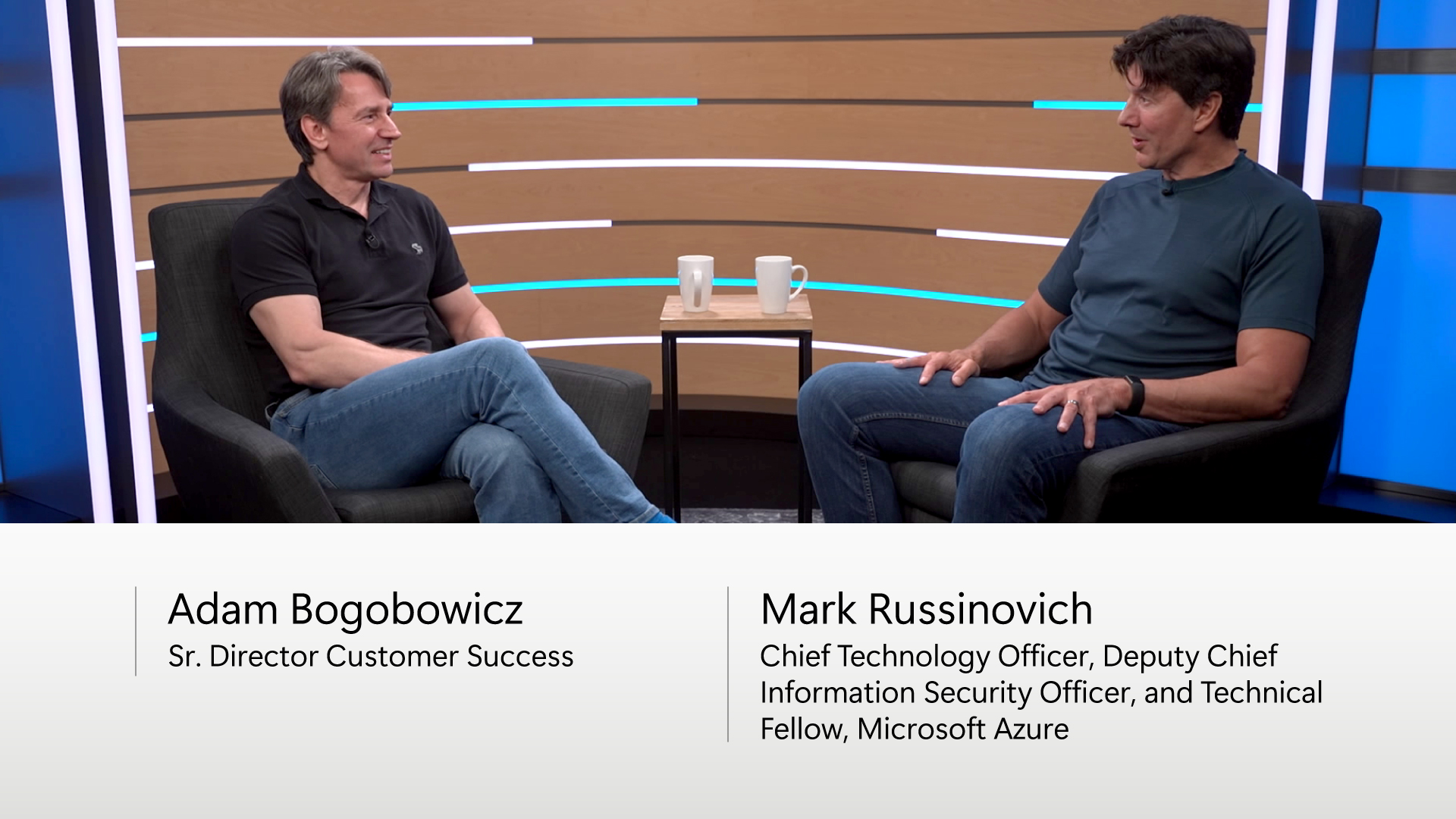
In the Azure Blog article, "Your architecture diagram is not your resilience," Microsoft makes a point that should resonate with every team that has completed, or is planning, a cloud migration: for years, resilience was often treated as something teams set up once. That approach kept systems running, but it also treated resilience as a project with an end date.
This is a familiar pattern in modernization programs. A team moves from on-premises infrastructure to the cloud, adopts managed services, updates deployment topology, adds redundancy, and documents the target state. The migration is declared successful because the architecture now includes the right boxes and arrows: load balancers, regions, availability zones, message queues, autoscaling groups, backups, and monitoring.
Those design choices matter. They are necessary. But they are not sufficient.
A reference architecture can describe how resilience should work. It cannot guarantee that resilience still works six months later after new services, new data flows, new deployment pipelines, new compliance requirements, and new business priorities have changed the system.
That is why reliability must be maintained as an ongoing property of the software system rather than represented only by an architecture diagram.
The Migration Diagram Is a Starting Point, Not an Operating Model
Cloud modernization efforts often stop too early. Teams invest heavily in migration diagrams, landing zone designs, service maps, and reference architectures. These artifacts are useful during planning because they align stakeholders and reduce ambiguity.
The problem starts when those artifacts become a substitute for operational truth.
An architecture diagram might show an application deployed across multiple availability zones. It may not show whether the database failover path has been tested recently. It may show an event bus between services. It may not show whether downstream consumers can tolerate duplicate events, delayed delivery, or schema changes. It may show observability components. It may not show whether alerts are actionable or whether the on-call engineer can diagnose a customer-impacting incident at 2 a.m.
Modern cloud systems are dynamic. Infrastructure is provisioned by code. Services scale automatically. Teams deploy independently. Dependencies change. Security policies evolve. Platform capabilities are upgraded. Over time, the gap between the intended architecture and the actual operating behavior can widen.
This is especially true after migration. The initial goal is often to exit a data center, reduce operational burden, or modernize a legacy stack. Once that milestone is reached, the organization may assume the resilience work is done. In reality, migration only changes the reliability surface. It does not eliminate it.
Reliability Is a Maintained System Property
A system property is not something you can point to in isolation. Performance is not a single server. Security is not a single firewall rule. Maintainability is not a single code review. In the same way, resilience is not a single architecture pattern.
Resilience emerges from many maintained practices working together:
- Redundant infrastructure that is actually exercised
- Deployment pipelines that support safe rollback and progressive delivery
- Observability that reflects user impact, not just resource health
- Runbooks that match current system behavior
- Dependency contracts that are tested as services evolve
- Recovery objectives that are understood and measurable
- Teams that rehearse incidents before customers experience them
This is where software maintenance and modernization intersect. Modernization is not just replacing an old platform with a newer one. It is improving the system’s ability to change safely over time. Reliability maintenance is part of that change capability.
At Vibgrate, we often see modernization programs succeed technically but struggle operationally when reliability practices are not updated with the system. A migrated application may run on modern cloud services while still depending on legacy release processes, unclear ownership, brittle integrations, or outdated support documentation. The architecture has changed, but the maintenance model has not.
What Diagrams Miss: Drift, Assumptions, and Operational Reality
Architecture diagrams are snapshots. Reliability is a movie.
A diagram can document the desired structure of a system, but production reliability depends on what happens continuously after that structure is implemented. Three issues are especially common.
Configuration and Dependency Drift
Cloud environments change constantly. New IAM permissions are added. Network rules are adjusted. Feature flags are introduced. Teams adopt new managed services. Third-party APIs change terms, limits, or behavior.
These changes may be individually reasonable, but collectively they can weaken resilience. A retry policy that worked for one dependency may overwhelm another. A new synchronous call may bypass an established queue. A backup policy may not include a newly created data store. A regional failover plan may assume resources that are no longer provisioned consistently across environments.
Drift is not always visible in a diagram. It has to be detected through continuous validation, configuration review, automated checks, and operational testing.
Untested Failure Paths
Many resilience mechanisms are only valuable if they are tested under realistic conditions. Backups do not matter unless restores work. Failover does not matter unless teams know how long it takes and what data consistency tradeoffs are involved. Autoscaling does not matter unless it reacts before users experience unacceptable latency.
A common anti-pattern is designing for failure without practicing failure. The team assumes the secondary path will work because it was configured during the migration project. Months later, the first real incident reveals missing permissions, stale DNS assumptions, undocumented manual steps, or insufficient capacity.
Continuous resilience validation closes this gap. Game days, chaos experiments, disaster recovery drills, and controlled dependency failure tests turn theoretical resilience into demonstrated resilience.
Observability Without Operational Readiness
The related announcements around Amazon CloudWatch Omni and modern observability reflect a broader industry trend: teams need better ways to understand distributed applications, including increasingly complex generative AI and agentic workloads. Likewise, event-driven architectures continue to expand, as seen in Amazon EventBridge enhancements for enterprise-scale event buses across teams and accounts.
These tools and patterns can improve reliability, but they also increase the need for disciplined operations. More events, traces, logs, and dashboards do not automatically create readiness. Teams need clear service-level indicators, ownership, escalation paths, and decision-making authority during incidents.
Observability should answer practical questions: Is the customer journey healthy? What changed recently? Which dependency is failing? Is the system recovering? Do we need to roll back, fail over, throttle, or degrade gracefully?
Practical Implications for Engineering Teams
Treating resilience as a maintained property changes how teams plan, build, and operate cloud systems after migration.
1. Define Reliability Objectives in Business Terms
Start with user and business impact. Instead of saying, “The service should be highly available,” define measurable objectives: checkout completion rate, API success rate, maximum acceptable latency, recovery time objective, recovery point objective, and error budget.
CTOs and engineering leaders should ensure these objectives are tied to product priorities. Not every workload needs the same level of resilience. A customer-facing payment flow deserves different investment than an internal reporting job. Clear objectives help teams make cost-conscious resilience decisions.
2. Keep Architecture Documentation Connected to Reality
Architecture diagrams should not be discarded. They should be maintained as living artifacts.
Link diagrams to infrastructure-as-code repositories, service catalogs, ownership metadata, runbooks, and monitoring dashboards. Review them during major releases and incident retrospectives. If a diagram does not match production, treat that mismatch as a reliability risk.
The goal is not perfect documentation. The goal is documentation that helps engineers reason about the current system during change and failure.
3. Validate Resilience Continuously
Build resilience checks into normal engineering workflows. Examples include:
- Automated backup and restore verification
- Scheduled disaster recovery tests
- Synthetic transactions for critical user journeys
- Load tests before major launches
- Dependency timeout and retry tests
- Deployment rollback exercises
- Chaos experiments in controlled environments
These practices should not be reserved for annual audits. They should become part of ongoing software maintenance, just like dependency upgrades, vulnerability patching, and performance tuning.
4. Modernize Operational Practices Alongside Technology
A cloud migration may replace servers with managed services, but people still need to operate the system. Runbooks, incident response processes, service ownership, and support handoffs must evolve with the architecture.
Ask practical questions after migration:
- Who owns each service and dependency?
- What happens when a managed service is degraded in one region?
- Which alerts wake someone up, and why?
- Can the on-call engineer safely roll back a release?
- Are recovery steps automated, documented, or tribal knowledge?
- Do teams understand the failure modes of event-driven and asynchronous workflows?
Modern platforms reduce some operational tasks, but they do not remove operational responsibility.
5. Use Incidents as Maintenance Signals
Every incident is evidence about the current system. Post-incident reviews should identify more than the immediate cause. They should expose maintenance gaps: outdated documentation, missing tests, unclear ownership, insufficient observability, fragile deployment processes, or architectural assumptions that no longer hold.
This is where reliability work becomes part of the modernization backlog. Instead of treating incidents as interruptions, treat them as inputs into continuous system improvement.
What This Means for CTOs and Modernization Leaders
For CTOs, the key shift is governance. Resilience cannot be delegated entirely to an initial architecture review or migration project team. It requires a sustained operating model with budget, ownership, and measurement.
That does not mean creating heavy process. It means making reliability visible and routine. Include resilience validation in quarterly engineering planning. Track reliability risks alongside technical debt. Fund modernization work that reduces operational fragility. Reward teams for improving recovery, not just shipping features.
For developers, the shift is equally important. Reliability is not only an infrastructure concern. Application code determines timeout behavior, idempotency, graceful degradation, data consistency, and dependency isolation. A resilient cloud platform can still host brittle software.
The best modernization strategies bring application, platform, and operations teams together around shared reliability outcomes.
Conclusion: Resilience Lives After the Migration
The Azure Blog’s message is timely: your architecture diagram is not your resilience. Diagrams can communicate design intent, but reliability is proven through ongoing maintenance, validation, and operational readiness.
Cloud migration is not the end of resilience work. It is the beginning of a new reliability lifecycle. The teams that get the most value from modernization will be the ones that treat resilience as a maintained system property, continuously tested and improved as the software, platform, and business evolve.